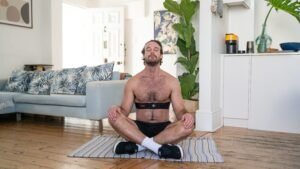
“Breathwork and meditation are different practices. Breathwork actively changes your state through the breath, settling an overactive nervous system within minutes. Meditation lets you rest in awareness, building a steadier mind over time. Reach for breathwork when you feel activated, meditation when you feel scattered.”
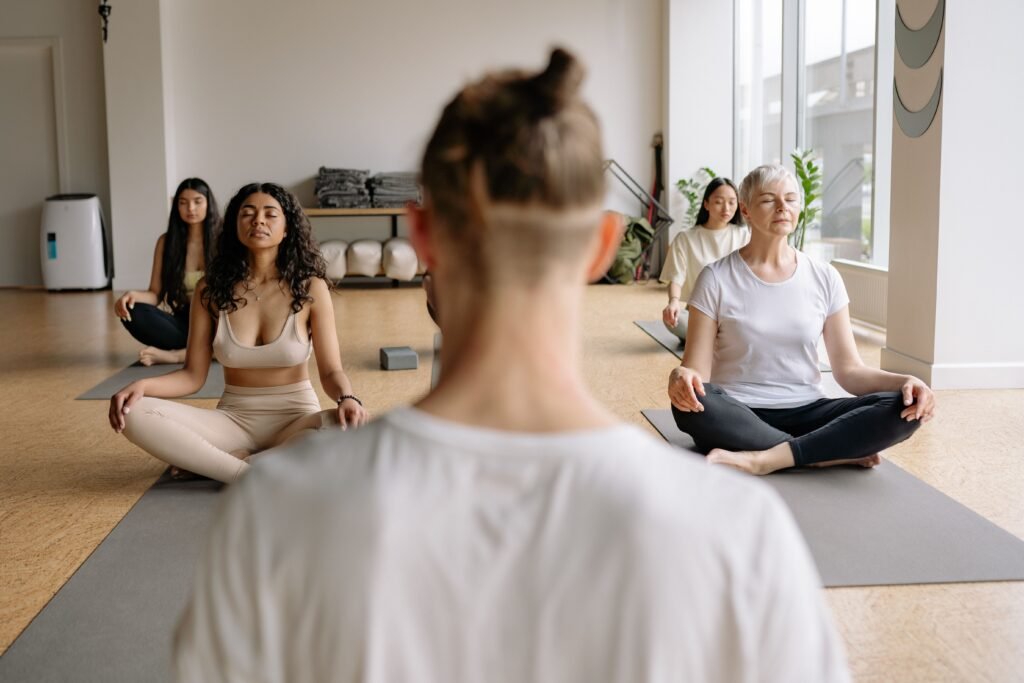
They’re often mentioned in the same breath, and many people assume they’re two words for the same thing. They appear side by side everywhere, in yoga classes, on meditation apps, woven through retreats, so it is no wonder the two blur together. Yet they are genuinely different practices, working on the mind and body in different ways.
Breathwork is active. You’re consciously changing the breath, slowing it, deepening it, following a pattern, and through that, deliberately shifting your physical and emotional state.
Because the breath is directly linked to the nervous system, breathwork works quickly. It can move you out of a stressed, activated state and into calm within minutes. Think of it as a hands-on tool: when you’re anxious, overwhelmed, or wired, breathwork gives you something to do that reliably brings the body down a gear.
Meditation is, in a sense, the opposite gesture. Rather than actively changing your state, you’re learning to rest in awareness, to watch your thoughts without grabbing onto them, to be present without managing anything.
Where breathwork does, meditation allows. Its gifts are quieter and more cumulative: over time, a steadier mind, more space between a feeling and your reaction to it, a calm that doesn’t depend on circumstances.
It is worth clearing up the most common misunderstanding here. Meditation is not emptying the mind or stopping thought, which is why so many people decide they are ‘bad at it’. The thoughts are meant to keep coming. The practice is simply noticing them, and letting them pass, without climbing aboard. No one ever fails at that. They only practise it.
| BREATHWORK | MEDITATION |
| Active, you change the breath | Receptive, you observe |
| Works within minutes | Builds gradually over time |
| Eases an activated body | Gathers a scattered mind |
| Body first | Mind first |
A simple way to choose:
When you feel activated, anxious, racing, overwhelmed, unable to settle, reach for breathwork. It meets an overactive nervous system with something to actively calm it.
When you feel scattered, distracted, foggy, pulled in many directions, lean toward meditation. It gathers a fragmented mind back into one place.
The time of day can guide you too. Slow breathwork in the evening helps the body let go toward sleep, while a few minutes of meditation on waking sets a steadier tone for the day ahead.
If you are new to both, breathwork is often the gentler doorway. It gives the mind something concrete to do, a rhythm to follow, which is far easier than being asked to simply sit with your thoughts. And once the breath has settled the body, meditation becomes much more approachable. Many people who believed they could not meditate find their way into it through a few quiet minutes of breathing first.
In truth, you don’t have to choose. The two are beautifully complementary. Breathwork settles the body, which makes meditation far easier to enter; meditation deepens the awareness that makes
breathwork more powerful. Practiced together, each makes the other richer.
This is why we never separate them. In our Wellness Yoga Program, mornings are devoted to yoga while afternoons soften into both breathwork and meditation, so you learn not just each practice, but how they support one another.
Want to learn both, guided and unhurried, over a few restorative days? Explore the Wellness Yoga Program